Mauritius Incentive Travel
By Cam | Nomadical Tracks · Updated September 2026
Table of Contents
For the people who have earned more than another company trip.
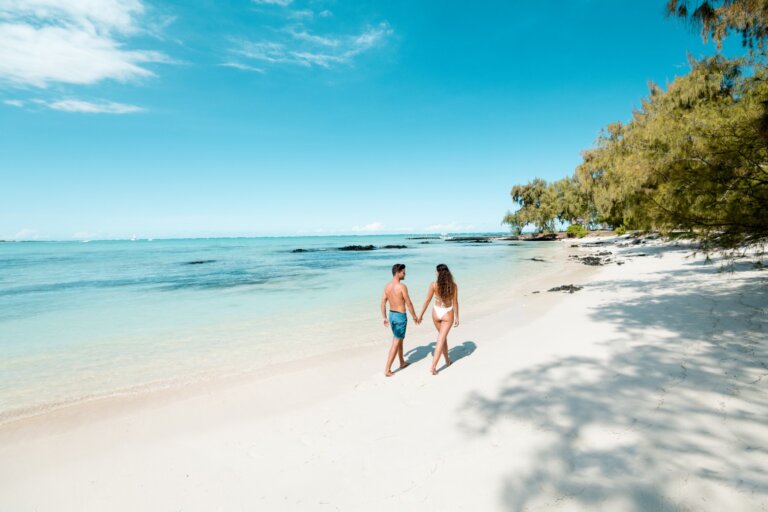
Mauritius has the beaches. It has the five-star resorts. It has the Indian Ocean backdrop.

But none of those, on their own, make it a great incentive destination.
What makes Mauritius particularly interesting for a 2027 corporate incentive trip is what can happen around them.
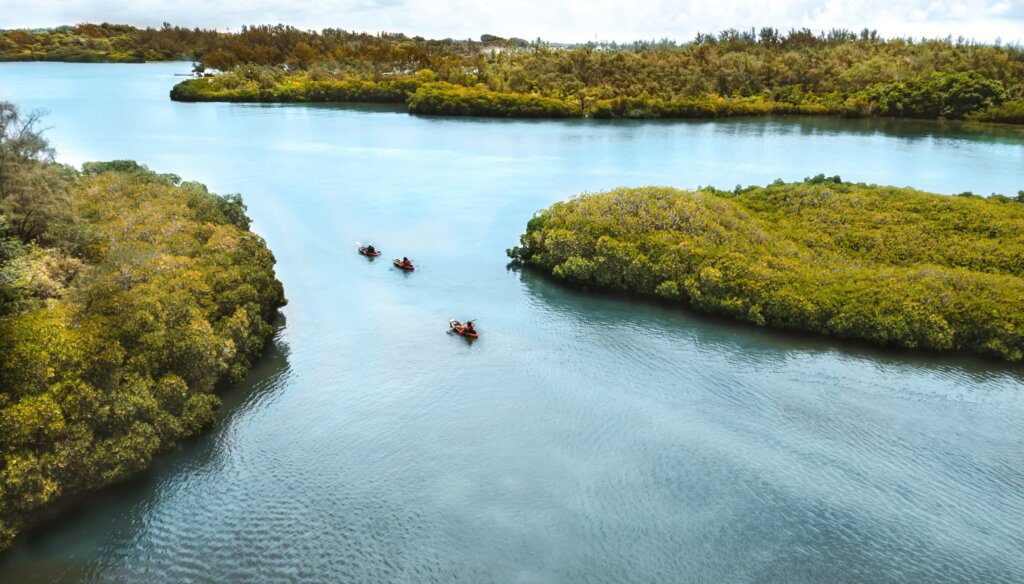
One morning could begin on a championship golf course. Another could take your winners out across the Indian Ocean by boat. There can be hiking, waterfalls, wellness, local food, water sports and time to do absolutely nothing. Then the programme can culminate in a private celebration created specifically around the people who earned their place there.
That range gives Mauritius something particularly valuable in incentive travel: contrast.
For businesses running a Presidents Club, Winners Circle, sales incentive or high-performer programme, that means you do not have to choose between an active destination and a relaxing one, between golf and wellness, or between resort luxury and genuine experiences.
You can build all of them into the same journey.
And that matters in 2027.
Research from the Incentive Research Foundation and SITE shows that nearly 70% of incentive travel buyers are seeking destinations they have not used before, while 63% already had new destinations booked for 2026 or 2027. Direct air access, high-quality accommodation and trusted destination expertise remain among the characteristics buyers value most.
For organisations that have already taken their top performers to the usual suspects, Mauritius deserves a place on the shortlist.
Is Mauritius good for corporate incentive travel?
Yes. Mauritius is particularly well suited to premium incentive programmes that need to combine genuine reward, memorable shared experiences and time to relax.
It has considerably more corporate-event infrastructure than its honeymoon reputation might suggest.
Mauritius’ official tourism organisation promotes conference centres, meeting rooms and event spaces capable of handling everything from small groups to events involving up to 5,000 delegates.
At the luxury end of the market, resorts including Four Seasons Resort Mauritius at Anahita actively cater for incentive groups, while Shangri-La Le Touessrok combines resort accommodation with event facilities, offshore experiences and access to championship golf.
But infrastructure is only part of the argument.
The stronger reason to choose Mauritius is that it gives a programme designer a broad canvas without requiring the group to keep changing hotels, catching domestic flights or moving between countries.
Mauritius can be a reward, an adventure, a golf destination, a wellness escape and a celebration at the same time.
Why incentive travel still works
Before choosing the destination, there is a more important question:
What are you actually trying to achieve?
The best incentive programmes are not simply expensive holidays paid for by the company.
They create a visible reward for performance.
They give people something tangible to qualify for.
They recognise achievement in a way that another line on a payslip cannot.
And, when designed properly, they can create stories and shared experiences that become part of the culture of a business.
The evidence supports the motivational appeal.
A 2025 Incentive Research Foundation study of 600 eligible employees across Europe found that 99.8% attributed at least some value to an incentive travel award, with more than three quarters saying it held a great deal of value. Some 97% said a well-designed group travel reward to an appealing destination would motivate them.
The same research found that beach and sunshine destinations ranked strongly with participants, alongside local culture, unique experiences and historical interest.
That combination is particularly relevant to Mauritius.
But there is an important distinction.
The destination creates desire. The programme creates the impact.
Simply flying 50 top performers to Mauritius and placing them in a luxury resort for five days is not the same as designing an incentive experience.
Why Mauritius works: contrast without complexity
Imagine two incentive programmes.
The first involves five days inside an attractive beach resort.
The second might look something like this:
You arrive to a private welcome overlooking the Indian Ocean.
The following morning, part of the group heads onto the golf course while others choose wellness or a water-based experience.
Another day is built around the ocean: boats, swimming, food, music and enough time for people to actually enjoy being there.
Then the scenery changes.
The group explores the greener side of Mauritius: mountain landscapes, forests or waterfalls.
Another experience introduces local food, rum, culture or the capital.
There is deliberately protected downtime.
And on the final night, everyone comes back together for an awards experience built around the company and the people being recognised.
Same island.
Completely different energies.
That is where Mauritius becomes compelling.
Ocean
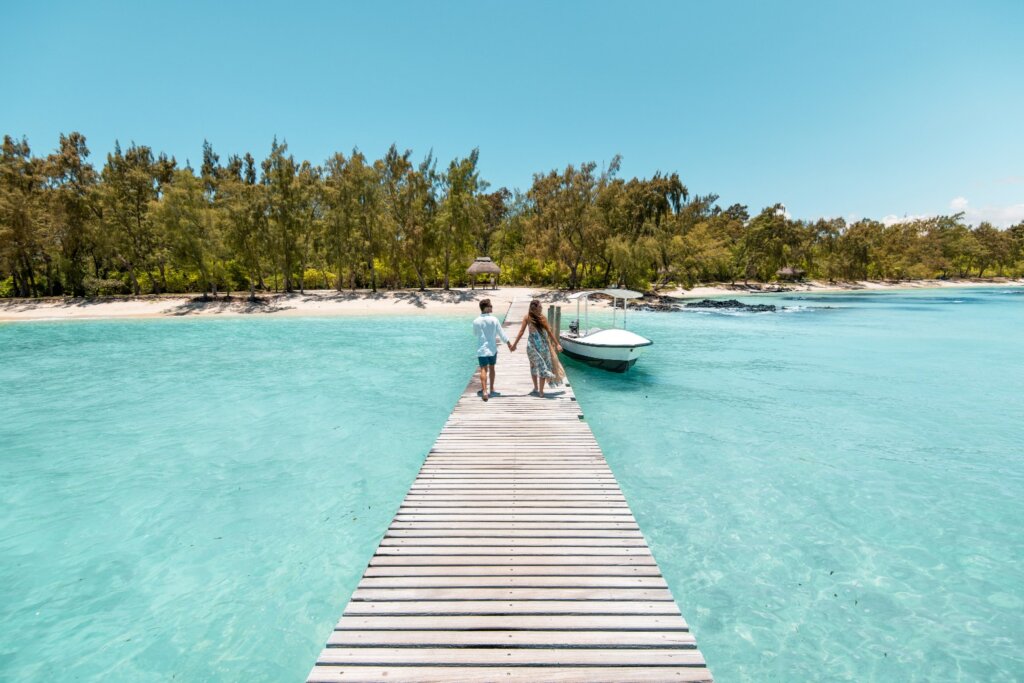
The Indian Ocean is not scenery to look at from the hotel.
It can become part of the programme.
Depending on the group and conditions, that could mean catamarans, sailing, snorkelling, swimming, water sports or an offshore experience built into an entire day.
Golf
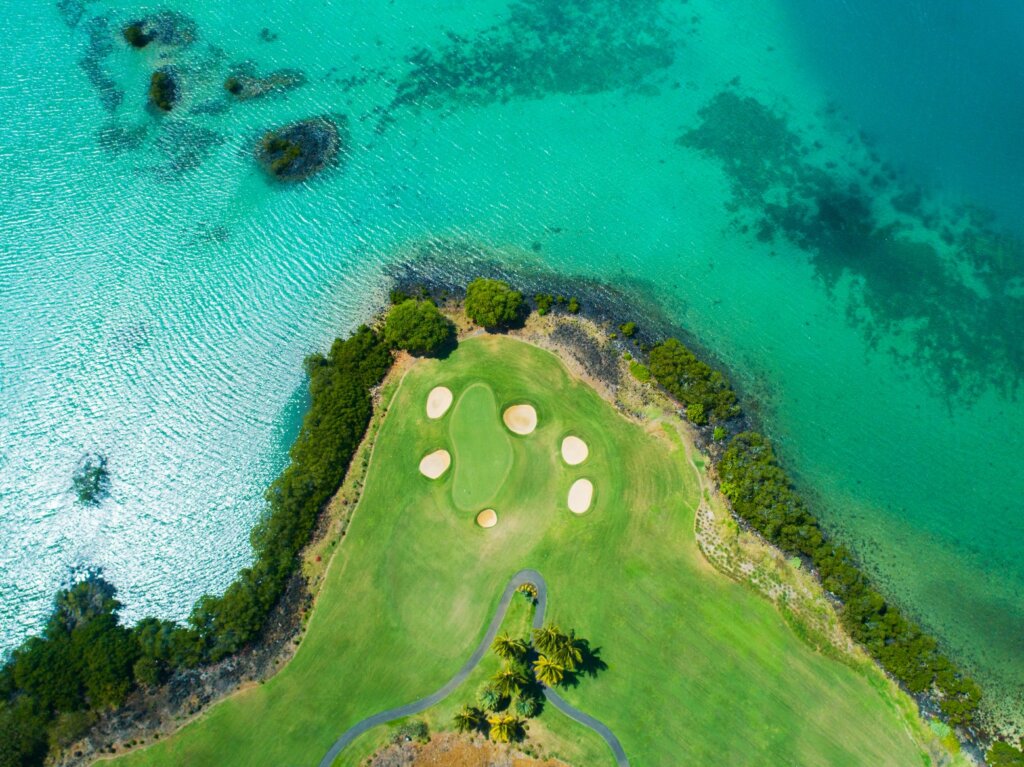
Mauritius is also a serious golf destination.
Île aux Cerfs Golf Club provides perhaps the best example of how golf can become an incentive experience rather than simply a tee time. The 18-hole course sits offshore, with guests of Shangri-La Le Touessrok travelling to it by boat from the resort.
For the right sales or leadership group, the journey to the course becomes part of the theatre.
For everyone who does not play golf, you build something equally desirable rather than making them feel like the alternative group.
Nature and adventure
Mauritius becomes much more interesting when you leave the resort belt.
The interior and southwest open up another version of the country: forests, mountains, viewpoints and waterfalls.
That allows an incentive to change pace dramatically without changing destination. Explore our guide to water sports in Mauritius
Wellness

Wellness should not mean adding a complimentary massage to the itinerary and ticking a box.
A genuine wellness strand might mean morning movement, spa time, nutrition, nature, sleep, water activities and enough unscheduled time to recover.
For leadership groups, founders or companies with less emphasis on overt competition, that can become the central theme rather than an optional extra.
Food and culture

An incentive should also feel connected to the place in which it happens.
Mauritius has African, Indian, Chinese and European influences woven through its food and culture.
That creates opportunities to move beyond international hotel restaurants and build in local flavours, markets, rum, music, heritage and destination-led dining.
The programme should feel like Mauritius, not an anonymous luxury resort that could have been anywhere.
Which businesses does Mauritius suit particularly well?
Mauritius can work across many sectors, but there are several types of organisation where the incentive model is especially strong.
Recruitment companies: turn the destination into part of the competition
Recruitment businesses are almost structurally designed for incentive travel.
Performance is measurable.
Leaderboards already exist.
Top billers are visible.
Teams are often commercially competitive.
And businesses are continuously looking for ways to motivate strong performers while retaining the people competitors would like to hire.
A Mauritius incentive can become considerably more than the reward at the end.
It can become part of the campaign itself.
Imagine launching an annual qualification programme where employees gradually discover what they are competing for:
Mauritius 2027.
Then reveal the resort.
Then the golf.
Then the boat experience.
Then the final-night celebration.
Use progress updates and leaderboards throughout the year.
Suddenly, the incentive is delivering motivational value months before the first winner arrives at the airport.
For recruitment companies already running an annual winners trip, Mauritius can also solve another problem: familiarity.
If Marbella, Ibiza or Dubai have already been done, repeating the same formula with a slightly different hotel risks diminishing the perceived value.
The next destination has to feel worth winning again.
SaaS and technology companies: create what remote work cannot
Technology companies have a different opportunity.
A high-performing revenue team may be spread across London, Dublin, New York, Amsterdam or entirely remote.
They can collaborate every day without occupying the same room.
What they cannot reproduce digitally is shared experience.
An incentive programme can bring together top-performing people who normally communicate through screens and give them several days of genuine connection without disguising another corporate conference as a reward.
Mauritius works because the programme does not need to be relentlessly scheduled.
A strong SaaS incentive might deliberately combine:
- one major shared experience
- optional activity choices
- significant downtime
- standout dining
- wellness
- recognition
- one exceptional final celebration
Your top performers do not need another five-day agenda.
They need something that feels earned.
Sales organisations: make the reward visible
For a sales-led business, the people who don’t qualify matter too.
A good incentive should be attractive enough that the next tier of salespeople look at the winners and think:
I’m going next year.
That means the value of the programme extends beyond the travellers themselves.
The journey can live throughout the company’s sales calendar:
Launch → qualification → leaderboard → winners → build-up → trip → recognition → next year’s launch.
Mauritius gives a Sales Director or CRO plenty of material to make that reward visible.
Not just a destination name.
A series of experiences worth competing for.
Pharmaceutical companies: premium, structured and carefully designed
Mauritius can also work for pharmaceutical-company employee incentives, leadership programmes and appropriate corporate groups.
However, the purpose and attendee profile matter.
An internal employee reward programme is fundamentally different from a meeting involving healthcare professionals.
Where UK healthcare professionals attend company-organised overseas meetings, the ABPI Code contains specific rules around meetings, hospitality and international events. Any such programme therefore requires the organisation’s own appropriate compliance review.
That is another reason we believe incentive planning should begin with:
Who is travelling? Why are they travelling? What does the programme need to accomplish?
Not:
Which hotel has availability?
What could a Mauritius incentive programme actually look like?
There is no Nomadical Tracks “Mauritius package”.
Nor should there be.
A 12-person Presidents Club needs a completely different programme from a 120-person company-wide winners trip.
But these are examples of what could be created.
1. The high-energy Sales Winners programme
Designed for competitive, sociable organisations.
Think:
- premium beachfront resort
- high-impact arrival
- golf or team competition
- water sports
- catamaran experience
- beach event
- nightlife where appropriate
- awards and recognition
- enough free time to prevent the trip becoming exhausting
The energy stays high, but every hour is not programmed.
2. The Presidents Club
Designed for a smaller group of exceptional performers.
Think:
- villa-style accommodation
- elevated transfers and arrival
- private dining
- golf or wellness choices
- exceptional boat day
- curated local experience
- meaningful downtime
- final private celebration
At this level, exclusivity matters more than volume.
Four Seasons Mauritius, for example, positions every accommodation as a private villa and currently markets dedicated incentive-group arrangements.
The point is not simply staying somewhere expensive.
It is making the entire programme feel inaccessible through an ordinary holiday booking.
3. The golf-led incentive
Mauritius gives us the opportunity to build golf into the identity of the programme.
That could mean:
- company tournament
- team formats
- branded competition
- nearest-the-pin challenges
- tuition or introduction for newer players
- premium parallel experiences for non-golfers
- awards incorporated into the final night
And when one of the golf experiences begins with a boat journey to an offshore course, the sport becomes part of the destination story.
4. The wellness and performance programme
The reward does not have to be loud.
For senior leaders, founders or businesses placing greater emphasis on wellbeing, Mauritius can become a deliberately slower incentive.
Morning movement.
Ocean.
Spa.
Exceptional food.
Nature.
Conversation.
Sleep.
Space.
A programme designed around recovery can feel every bit as premium as one filled with expensive activities.
5. The larger Winners Circle
Once group size moves into the dozens or hundreds, itinerary design changes.
Hotels need sufficient room inventory.
Restaurants need to move people efficiently.
Transport has to work.
Activities need realistic throughput.
Private venues need capacity.
Contingency planning becomes more important.
Mauritius has the infrastructure to host substantial MICE groups, but the hotel selection now becomes an operational decision as much as a luxury one.
That is where experienced in-country delivery becomes critical.
How do you stop an incentive feeling like an ordinary holiday?
This is one of the most important questions in incentive travel.
If an employee could reproduce the programme by going onto a booking website and spending a week at the same resort, what exactly did the company create?
The answer is access, design and context.
An incentive should contain moments that exist because the group is there together.
A private event.
A competition.
An unexpected location.
Something happening offshore.
A local experience unavailable from the hotel excursions desk.
A meaningful recognition moment.
A dinner transformed by production, music or setting.
A story that belongs to that particular group.
You do not need 20 of these.
You need a few exceptional ones.
Should you schedule every day?
No.
In fact, one of the easiest ways to damage a luxury incentive is to over-design it.
There is a temptation to justify the budget by filling every available hour with activity.
Breakfast at 7.30.
Coach at 8.15.
Experience at 9.
Lunch.
Second experience.
Transfer.
Dinner.
Repeat.
By day three, the reward feels like work.
If you’ve flown your top performers to Mauritius, give them enough space to enjoy Mauritius.
Some of the most valuable moments will not appear on the itinerary at all.
They happen around the pool, over lunch, on the golf course, at the bar or during an afternoon when nobody has to be anywhere.
Choice is also important.
The best programme for 50 people may include moments when they stop operating as a group of 50.
Mauritius vs Dubai, Marbella, Maldives and other incentive destinations
Mauritius is not right for every programme.
Nor should any good incentive specialist pretend it is.
Mauritius vs Marbella
Choose Marbella when: you want a shorter flight, three or four nights, strong nightlife, golf and easy European logistics.
Consider Mauritius when: the reward needs to feel materially bigger, more exotic and more removed from normal European leisure travel.
Mauritius vs Dubai
Choose Dubai when: connectivity, major-event infrastructure, restaurants, nightlife and polished urban experiences dominate the brief.
Consider Mauritius when: you want the Indian Ocean, tropical landscapes, stronger resort immersion, golf, nature and a softer pace.
Mauritius vs Maldives
Choose the Maldives when: privacy, marine experiences and extraordinary resort seclusion are the priorities.
Consider Mauritius when: you want luxury island hospitality but also need golf, land-based adventure, local exploration and considerably more itinerary variety.
Mauritius vs Cape Town
Choose Cape Town when: gastronomy, wine, urban culture, nightlife and a highly varied surrounding region are central to the trip.
Consider Mauritius when: the programme needs a more concentrated tropical reward environment centred on resort luxury, ocean and relaxation.
Mauritius vs Ibiza
Choose Ibiza when: nightlife, beach clubs and short-haul energy are the objective.
Consider Mauritius when: the audience is broader or the programme needs to balance celebration with wellness, golf, nature and downtime.
The question is therefore not:
“Is Mauritius better?”
It is:
“Which destination best serves the people we are trying to motivate?”
How long should a Mauritius incentive trip be?
For a UK-originating group, around five nights is a strong starting point.
Air Mauritius is currently selling London–Mauritius travel into 2027, making the destination viable for programmes already being planned for next year.
Because this is long-haul travel, we would be cautious about compressing it into the sort of three-night format that works well in Marbella or Ibiza.
Four nights can work.
Five gives much more breathing space.
Six or seven can be appropriate for particularly prestigious programmes.
Interestingly, IRF research into European incentive participants also found a strong preference for multi-day programmes rather than very short trips, with four-to-six-day and seven-to-ten-day durations both attracting significant interest.
The goal is not to make the programme as long as possible.
It is to make the flight worthwhile without creating an absence from work that becomes counterproductive.
When is the best time for a Mauritius corporate incentive?
Mauritius can be visited year-round, but the month matters when you are moving an entire corporate group.
According to Mauritius Meteorological Services, February and March are historically the wettest months and October the driest. The cooler part of the year generally runs from May into October, with June to September particularly associated with cooler conditions and trade winds.
For many incentive programmes, periods around May–June and September–November are therefore worth investigating.
But we would not choose a date from a climate chart alone.
The right period depends on:
- which coast you use
- hotel availability
- flight inventory
- group size
- planned water activities
- golf
- corporate qualification dates
- school-holiday demand
- desired temperatures
- overall budget
Weather is one input into programme design, not the entire decision.
How much does a Mauritius incentive trip cost?
There is no credible universal answer.
And anyone offering one before understanding the brief is probably pricing the wrong thing.
A Mauritius incentive budget can change substantially based on:
- flights
- season
- hotel category
- single versus shared rooms
- group size
- villa requirements
- food and beverage
- premium dining
- private venue hire
- golf
- boats
- water experiences
- entertainment
- event production
- branding
- gifting
- staffing
- ground transport
- exclusivity
For broader industry context, the Incentive Research Foundation reported average incentive travel spend of approximately US$5,100 per participant, after a 4% year-on-year rise. That is a global industry benchmark rather than a Mauritius price and individual programmes can sit substantially above or below it.
We would rather ask a more useful question:
Where will spending create the greatest perceived value for your winners?
Sometimes that means upgrading accommodation.
Sometimes it means keeping the hotel slightly below the top tier and spending more on private experiences.
Sometimes the hero event matters more.
Sometimes the boat does.
The objective is not to build the most expensive itinerary.
It is to create the programme that feels most valuable.
How far ahead should you plan a 2027 Mauritius incentive?
If Mauritius is a serious possibility for 2027, start exploring it before the qualification programme is finished.
You do not need every traveller’s name.
You do need enough time to understand:
- realistic hotel inventory
- flight options
- programme costs
- event venues
- golf availability
- activity capacity
- logistics
- weather and seasonality
The larger the group, the more important that lead time becomes.
A substantial incentive is rarely one booking.
It is an interlocking set of inventory:
air + hotel + transport + activities + dining + venues + production + people.
Planning earlier also gives you something commercially useful:
The ability to reveal the reward while employees are still trying to qualify for it.
Why work with an incentive travel specialist?
Because an incentive is not simply group travel with a better hotel.
The mechanics have to work.
Flights.
Rooms.
Transfers.
Restaurants.
Activities.
Dietary requirements.
Contingencies.
But those are the baseline.
The more interesting work happens before any of them are booked.
We want to know:
Who are your people?
What have they achieved?
What would they genuinely want to win?
What has your company done before?
What should feel different this time?
How competitive should the programme be?
How much freedom should people have?
What is the moment everyone should remember?
Then the destination is designed around the answers.
How Nomadical Tracks builds incentive travel in Mauritius
At Nomadical Tracks, we do not begin with a pre-built Mauritius package.
We combine creative programme design with experienced in-country destination expertise to build around the organisation, the travellers and the commercial objective.
That can include:
- destination strategy
- hotel selection
- programme and itinerary design
- ground logistics
- golf
- wellness
- boats and water experiences
- local activities
- restaurants
- private events
- celebrations
- awards evenings
- in-country operational support
Sometimes the result will be high energy.
Sometimes it will be intentionally slow.
Sometimes the golf course will be central.
Sometimes nobody will touch a golf club.
The point is not to show you everything Mauritius can do.
It is to choose the right things.
Planning a Mauritius incentive for 2027?
Perhaps you already run an annual Presidents Club and want next year’s programme to feel different.
Perhaps your winners have already done Dubai, Marbella or Ibiza.
Perhaps your existing incentive has started to feel predictable.
Or perhaps you are considering introducing incentive travel for the first time and want to understand what a programme could realistically look like before committing to it.
We would start with a conversation.
Tell us:
- who you want to reward
- approximately how many people may qualify
- when you are considering travelling
- what you have done before
- what you want the programme to achieve
- the level of investment you are considering
Then we can explore what Mauritius could look like around your organisation.
Not somebody else’s itinerary with your logo added to it.
Explore your 2027 Mauritius incentive with Nomadical Tracks.
Frequently Asked Questions About Mauritius Incentive Travel
Is Mauritius a good destination for an incentive trip?
Yes. Mauritius is particularly strong for premium corporate incentives because luxury resorts can be combined with golf, ocean experiences, wellness, nature, culture, dining and private events within one destination. It is especially compelling for programmes that need more variety than a conventional resort stay.
What companies are best suited to a Mauritius incentive?
Mauritius can work particularly well for recruitment companies, technology and SaaS businesses, sales-led organisations, financial and professional services companies, iGaming and fintech businesses, leadership groups and organisations operating Presidents Clubs or Winners Circle programmes.
The more important consideration is the audience and programme objective rather than the industry alone.
Is Mauritius suitable for a Presidents Club?
Yes. Mauritius is particularly well suited to premium Presidents Club programmes because smaller groups can combine villa-style accommodation, privacy, golf, wellness, boating, dining and exclusive group experiences.
Can Mauritius handle large corporate groups?
Yes. Mauritius has established MICE infrastructure, with the official tourism organisation promoting event facilities ranging from small meetings to capacities of up to 5,000 delegates.
The appropriate resort and programme design will still depend heavily on actual group size.
How many nights should a Mauritius incentive trip be?
For companies travelling from the UK, approximately five nights is a useful starting point. Four nights is possible, while six or seven may suit especially prestigious programmes. Very short programmes can be harder to justify given the long-haul journey.
What can companies do on an incentive trip to Mauritius?
Depending on the programme, possibilities can include golf, sailing and boating, water sports, wellness, hiking and nature, local gastronomy, rum experiences, cultural activities, private dining, beach events, team competitions and awards evenings.
The programme should not attempt to include all of them.
The best itinerary selects the experiences that fit the people.
When is the best time to run a Mauritius incentive?
Mauritius is a year-round destination, although conditions vary. Official climate data identifies February and March as historically the wettest months and October as the driest. May and October are transition periods, while June to September are generally cooler.
The best dates should also take hotel inventory, group activities, flights and the company’s own qualification calendar into account.
Can you fly directly from the UK to Mauritius?
London–Mauritius services are currently available and Air Mauritius is already selling travel dates in 2027. Flight schedules should always be reconfirmed for the specific group dates before contracting a programme.
Do British citizens need a visa for Mauritius?
Current UK government guidance states that visitors can travel to Mauritius without a visa for stays of up to 60 days, subject to entry conditions. Requirements should always be checked again before travel.
How much does a Mauritius corporate incentive cost?
There is no fixed per-person price. Airfare, accommodation, group size, dates, room configuration, private events, food and beverage, boats, golf, production and activity selection can all materially change the budget.
The best approach is to establish the intended experience and commercial parameters before building the programme.
Is Mauritius better than Dubai for corporate incentives?
It depends on the brief. Dubai tends to win on connectivity, large-scale infrastructure, dining and urban nightlife. Mauritius can be stronger when the objective is a tropical reward combining ocean, resort luxury, golf, nature, wellness and relaxation.
Is Mauritius good for sales incentive trips?
Yes. Mauritius has the prestige, variety and sense of occasion to work particularly well for sales winners, annual top-performer trips, Presidents Clubs and Winners Circle programmes.
Its biggest advantage may be that the destination can become part of the qualification campaign months before the winners travel.
How far in advance should we plan a 2027 Mauritius incentive?
Larger and more ambitious programmes benefit from being explored well in advance, especially where premium rooms, group flights, private venues, boats, golf or major event production are required.
You do not need confirmed traveller names before starting the conversation.
You need a clear idea of the audience, likely group size, timing and objective.
Ready to make Mauritius worth winning?
Tell Nomadical Tracks about the people you want to reward and the kind of programme you want to create.
Start your 2027 Mauritius incentive brief.
Sources & Research
This guide has been informed by current destination information and incentive travel research from the Mauritius Tourism Promotion Authority, Mauritius Meteorological Services, Incentive Research Foundation, SITE, Air Mauritius, GOV.UK, PMCPA/ABPI, Four Seasons Hotels and Resorts and Shangri-La Hotels and Resorts.
Travel schedules, entry requirements, hotel facilities and programme availability can change. All arrangements are reconfirmed for the specific dates and requirements of each Nomadical Tracks incentive programme.